
(𝘍𝘪𝘳𝘴𝘵 𝘊𝘩𝘳𝘰𝘯𝘪𝘤𝘭𝘦 𝘰𝘧 : 𝘌𝘭 𝘊𝘳𝘰𝘯𝘪𝘴𝘵𝘢 𝘺 𝘓𝘢 𝘗𝘦𝘳𝘦𝘨𝘳𝘪𝘯𝘢 — 𝘛𝘩𝘦 𝘏𝘪𝘴𝘵𝘰𝘳𝘪𝘢𝘯 𝘢𝘯𝘥 𝘵𝘩𝘦 𝘗𝘪𝘭𝘨𝘳𝘪𝘮)
The Day the Souls Come Home
In the Yucatán, the end of October doesn’t bring skeletons or parades — it brings something quieter and older.
Here, the celebration known as Hanal Pixan, “the food of souls,” carries a rhythm that predates Mexico itself. It is not the Day of the Dead as seen in Mexico City or Oaxaca, but its Mayan ancestor — a ritual that still breathes through island homes, fishing families, and sacred kitchens.
Each year, from October 31 to November 7, the living prepare food, prayers, and aromas for the spirits of loved ones who return to visit.
The souls of children arrive first on October 31, followed by the souls of adults on November 1, and All Saints’ Day on November 2. For eight days they remain among their families — guided not by photographs or sugar skulls, but by scent, smoke, and memory.
In recent years, the municipal government of Isla Mujeres has also organized public Day of the Dead parades and cultural exhibitions, allowing visitors to experience the diverse ways Mexico honors its dead.
This effort reflects an intercultural exchange — a celebration that embraces both national and international traditions while preserving the island’s Mayan roots.
The Mayan View of Death
As historian Don Fidel Villanueva Madrid, Cronista de Isla Mujeres, has explained in his teachings, the Maya never saw night as death but as the certainty of rebirth and a new day. (Paraphrased insight from Don Fidel’s discussion on Mayan cosmology.)
Long before Catholicism, the Maya honored the underworld (Xibalbá) not as a place of fear but as a continuation of life — a return to the roots.
When the Spanish arrived, their faith and Mayan cosmology intertwined, blending rosaries with incense, saints with ancestral spirits.
The result is Hanal Pixan — a fusion where two worlds meet: heaven above and the earth below, connected through the heart of the living.
Feeding the Souls
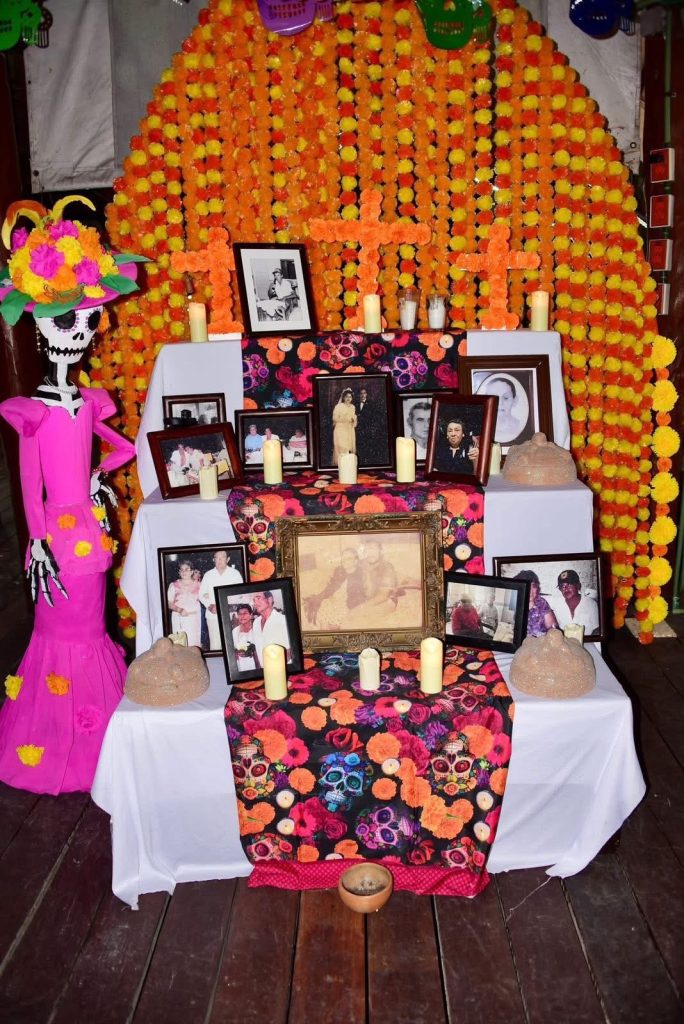
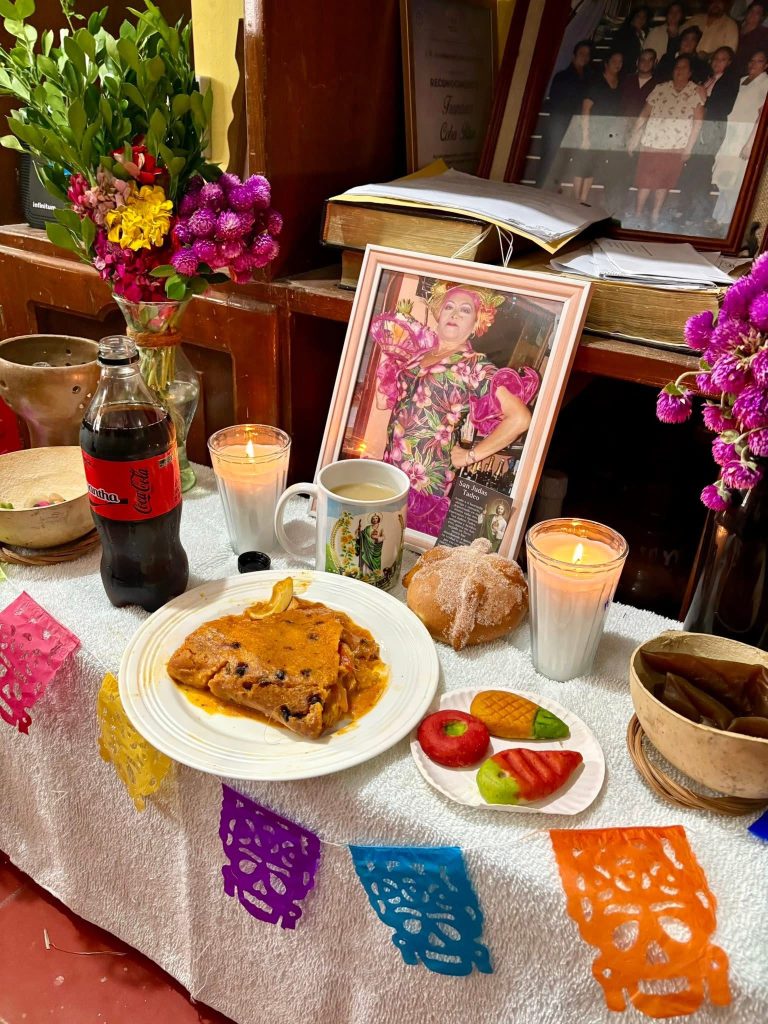
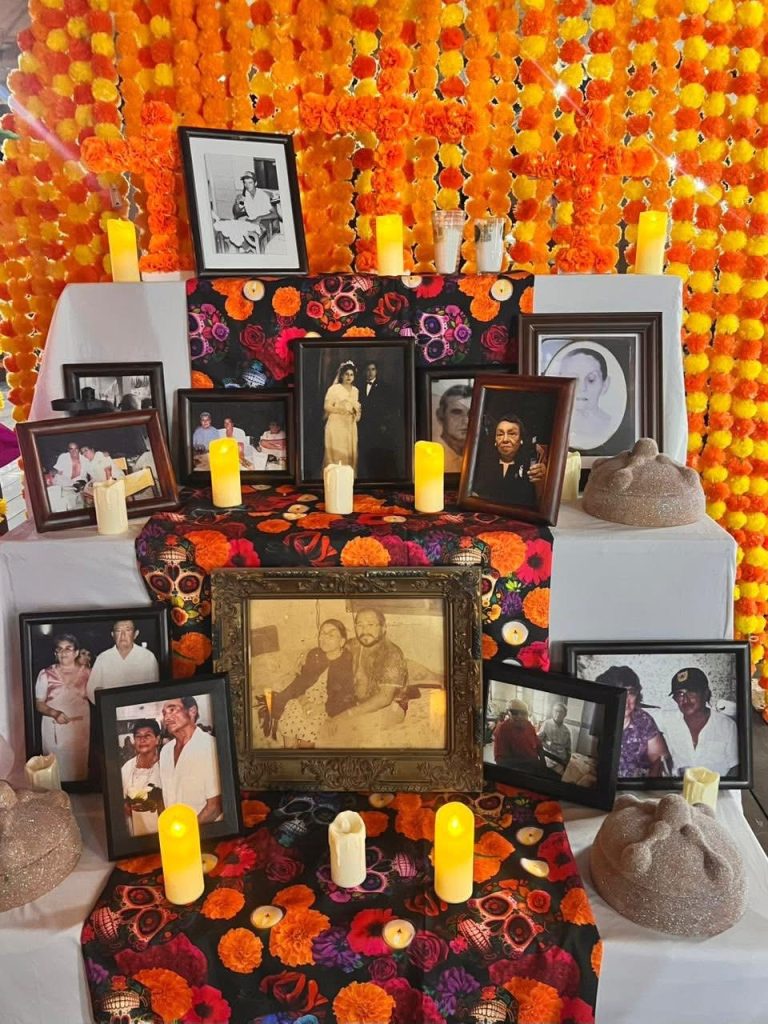
Unlike modern Day of the Dead altars, Hanal Pixan’s offerings are profoundly personal. Families build them with what the souls loved most — not just food, but presence:
A machete or fishing net for a fisherman.
A favorite shirt or hat.
A bowl of water and burning pom (copal) to purify the path.
Four jícaras of atole symbolizing the directions of the universe “los 4 rumbos.”
Black and white candles for mourning and light.
At the top or center of every altar stands the fiadora — the Virgin in whom the family places its faith. She is both guardian and witness, the spiritual anchor that blesses the offering.
In Isla Mujeres, devotion often centers on La Virgen de la Concepción, patroness of the island, followed by La Caridad del Cobre, La Virgen del Carmen, and La Virgen de Guadalupe, among others.
Each family chooses the Virgin who has guided them through storms and seasons — the same divine protector who now welcomes their souls home.
The fiadora can also be represented by any Catholic symbol — a cross, a saint, or an image of Christ — whatever form of faith the family holds most dear.
While the adult altar is solemn, with a white cloth trimmed in black; the children’s altar bursts with color and playfulness, adorned with toys and colored candles to light their way home.
A small side table is set with food and water for the ánima sola — the “lost soul” with no family to pray for it, a gesture of compassion ensuring no spirit goes unfed.
Three times a day — at breakfast, lunch, and dinner — families pray, share, and feed the souls with the aromas of candied pumpkin, papaya, sweet potato, and atole.
As Don Fidel taught me, the souls are nourished not by the food itself, but by its scent, effort, and the love that created it. (Paraphrased from his comments on the essence of the offering.)
The Heart of the Celebration: The Pibipollo
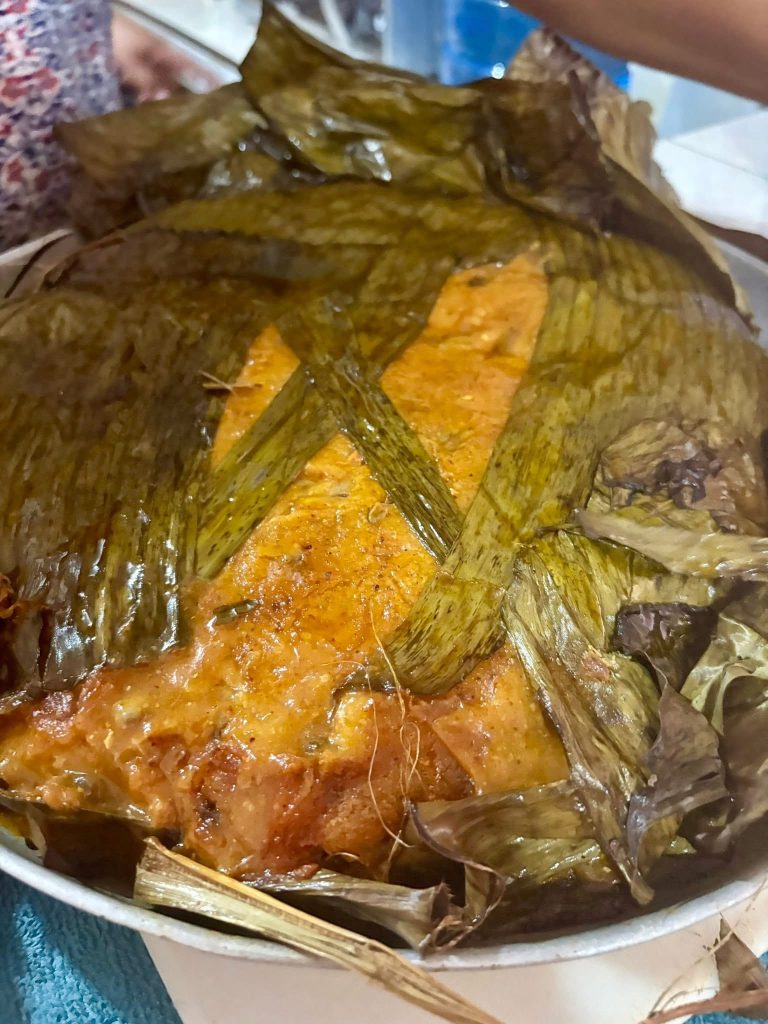
On the eighth day comes the farewell — marked by one of Yucatán’s most sacred and labor-intensive dishes: the pibipollo, or buried tamal.
It is more than food; it is a work of devotion. Traditionally this dish was served on November 7th, the last day of Hanal Pixan, to make sure that the souls had plenty to sustain them on their journey back. Today el pibipollo is prepared during any day of the ceremonies.
Preparation begins days before the souls’ return. Women gather to grind nixtamalized corn by hand, forming the masa that will encase the sacred filling. Pork lard is added for richness, and recado rojo — a vivid Mayan blend of achiote, garlic, oregano, black pepper, and sour orange — gives the masa its fiery color.
Some families add espelón beans, a local black-eyed bean hand-separated from its pods — a meticulous, time-consuming task done with patience and rhythm, often lasting an entire afternoon.
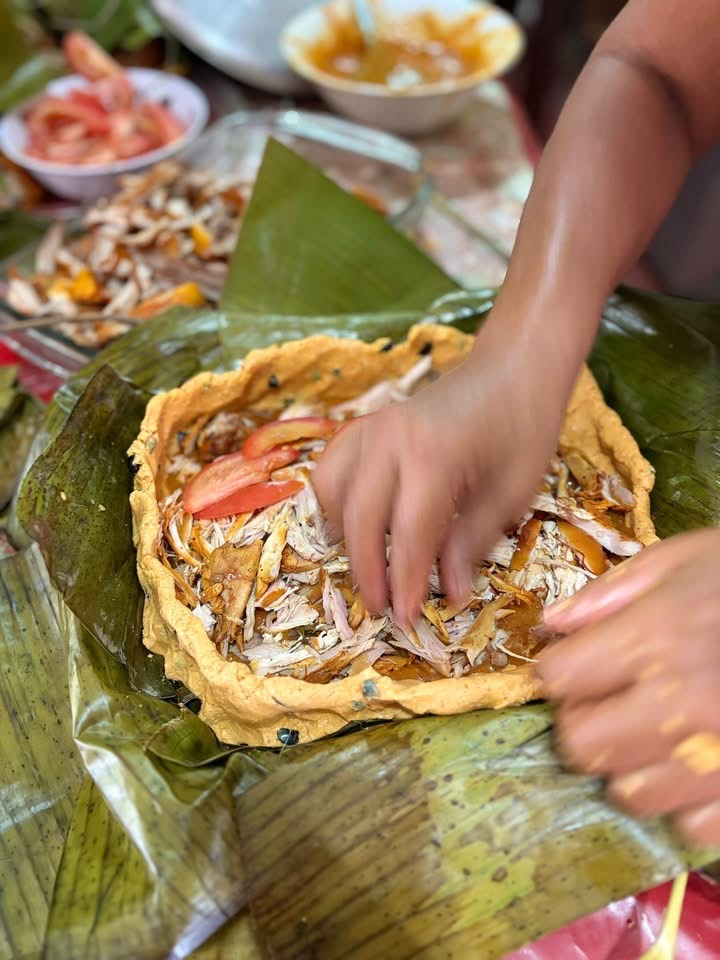
Following the traditional method described by Don Fidel, a base of masa is pressed into a large bowl form and filled with the col, a savory sauce of broth, masa, and recado rojo (achiote, onion, garlic paste) that is stirred for hours until thick and silky.
Layers of meat — chicken, turkey, pork, or beef — are added in between, along with tomatoes, onions, epazote, salt, pepper, and chiles habanero and xkatik.
The top is sealed with another thin layer of masa, carefully pressed with the fingers to seal. Every detail matters: the way the masa is kneaded, the way the leaves are softened and cleaned. The dish’s integrity is measured not in taste, but in care.
Everything is then wrapped in banana leaves, followed by layers of chit palm, tied tightly with the palm’s natural fibers.
Meanwhile, the men prepare the pib — a one-meter-deep pit lined with hard stones. They stack dry wood “leña” inside and light it until the stones turn white-hot. A portion of the embers is removed, and a metal sheet or banana leaves are laid down before the pibes (tamal bundles) are lowered into the earth.
The pit is sealed with leaves, metal, and dirt to trap the heat.
For three to four hours, the aroma of corn, smoke, and spice fills the air.
The women pray. The men tend the fire. The children wait.
When unearthed, the pibipollo emerges steaming and golden — the perfect union of fire, earth, and offering.
Every hand that touched it, every hour of labor, becomes part of the gift.
Each family guards its own recipe, but all share the same intention: to send their loved ones back to the spirit world nourished for the journey home — with food made from love, time, and memory itself.
(Details of the traditional pibipollo process were reviewed and confirmed with Don Fidel Villanueva Madrid, Official Historian of Isla Mujeres, October 2025.)
A Different Kind of Day of the Dead
In the Yucatán Peninsula, Hanal Pixan is not a spectacle — it is communion.
While other regions celebrate with processions and marigolds, the Maya keep their ritual intimate, domestic, and rooted in continuity.
Painting faces as skulls, now popular throughout Mexico and beyond, was never part of the original Hanal Pixan ceremonies.
Early Mayan observances centered on prayer, food, and aroma — offerings meant to nourish and guide the souls, not to imitate them.
For the Maya, death was not a costume, but a companion — welcomed as a guest through quiet reverence and shared remembrance.
The orange marigold (cempasúchil) is not native here; instead, altars once bloomed with only siricote, chaksiquin, and xpujak — flowers of the island’s own soil and spirit.
Trusted and Tradition at Yaakun
This year, travelers can experience the true flavors of Hanal Pixan at Yaakun Cocina Restaurant in centro, the only venue in Isla Mujeres offering an authentic Yucatecan culinary celebration of this sacred time.
For a limited period, Yaakun’s chef will prepare traditional pibipollo and other regional Yucatecan dishes using ancestral techniques passed down through generations.
The evening will be accompanied by traditional Day of the Dead songs such as “La Llorona,” trova Yucateca and trova isleña — the island’s own folk music tradition, where guitar melodies and poetic lyrics tell stories of love, the sea, and memory.
(Trova isleña originated as a blend of Cuban and Yucatecan trova, adapted by Isla Mujeres musicians into a distinctive Caribbean sound.)
At Yaakun, food and music become offerings — a living altar of flavor and gratitude.
As Don Fidel — whose granddaughter Lidibet Villanueva Canto is a sous-chef in Yaakun’s kitchen — often reminds us (paraphrased):
“The souls don’t just visit — they sit with us to eat.”
Author’s Note
This article is part of the bilingual series El Cronista y La Peregrina — The Historian and the Pilgrim, which brings to English for the first time the official history and oral traditions of Isla Mujeres as preserved by Don Fidel Villanueva Madrid, Cronista de Isla Mujeres.
Through collaboration with local voices and historians, this project celebrates the living heritage of the island — from its gods and fishermen to its flavors and faith.
Follow Don Fidel Villanueva Madrid’s page for authentic stories, history, and legends of Isla Mujeres — directly from the island’s official historian. Just click “See Translation” on his posts to read them in English.