
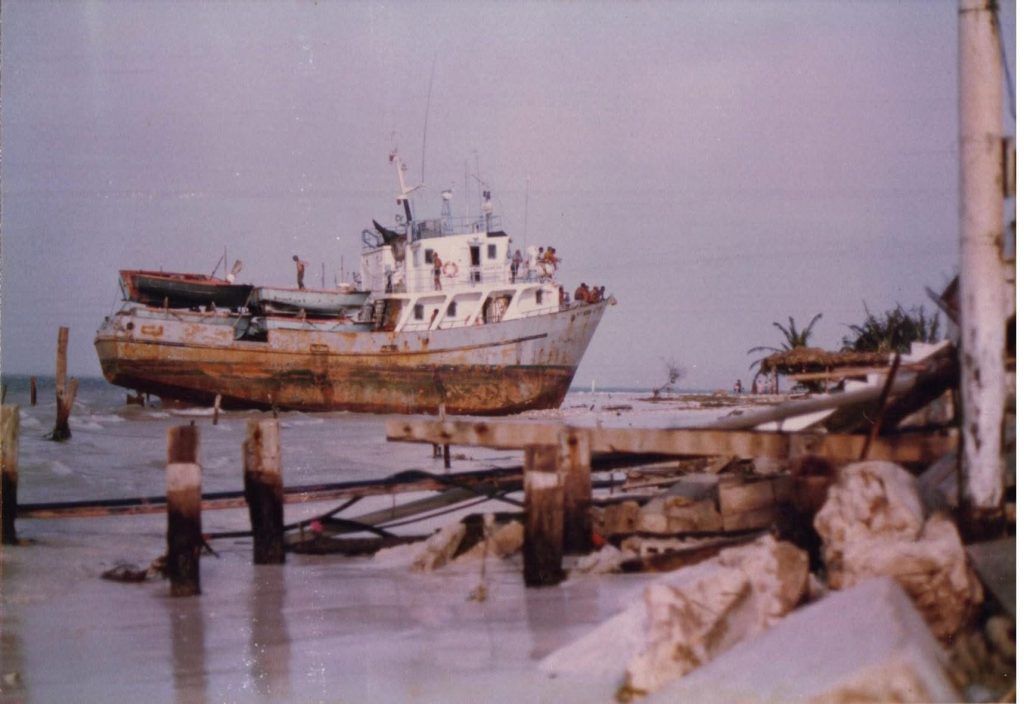
By Sail and Oar: How Spanish-Cuban Fisherman Brought Isla Mujeres to Life
𝘈 𝘴𝘵𝘰𝘳𝘺 𝘰𝘧 𝘵𝘪𝘥𝘦𝘴, 𝘵𝘳𝘢𝘥𝘦, 𝘢𝘯𝘥 𝘵𝘳𝘢𝘯𝘴𝘧𝘰𝘳𝘮𝘢𝘵𝘪𝘰𝘯Before Isla Mujeres was a town, it was a tide — raised by sails from Havana, anchored by hope,and carried forward by the oars of its first fishermen. For centuries after the Spanish conquest, the eastern coast of the Yucatán lay nearly empty. The Maya, fleeing enslavement and forced conversion, retreated deep into the jungles of what is now Quintana Roo. Their temples and coastal fishing camps fell silent, and the sacred island once dedicated to Ixchel — goddess of fertility, medicine, and the sea — became a windswept sanctuary surrounded by salt and horizon. But across the straits, another story was forming. From Havana to Isla Mujeres: The Return to the Coast In the early 1500s, Spanish-Cuban fishermen from Havana and Batabanó — descendants ofSpanish settlers and Cuban Creoles — began crossing the Yucatán Channel in search of richfishing grounds. They traveled in schooners and goletas equipped with viveros — wooden compartmentsdesigned to allow seawater to circulate freely, keeping their catch alive during long journeyshome. Each spring, when the winds softened and the currents turned favorable, their sails appeared on the horizon. They came for grouper and turtle, anchoring along the coast across from Isla Mujeres, movingthrough these waters season after season, following the same currents and reefs that still define the region today — including the untouched island of Contoy. But they brought more than nets and boats.They brought a way of life. When they arrived, they did not remain apart. They came ashore and opened their world to theisland. They brought dates, cheeses, coffee, Romano, wine, and even whole pigs. They prepared largemeals and invited islanders — both aboard their boats and onto the beaches — to eat withthem. They brought gifts.They shared stories.They created a true hermandad — a brotherhood rooted in the sea.And with that, they shared something even more lasting:Knowledge. From Farmers to Fishermen When the first permanent settlement began to form on the island in 1847, at the height of theCaste War, its early inhabitants were not sailors but farmers from across the Yucatán Peninsula. They came seeking refuge from violence and found an island rich in salt, wood, and life from the sea. But to survive here, they had to learn to fish — and their teachers were the Spanish-Cuban fishermen who had been anchoring offshore for generations. Under their guidance, the newcomers learned not only how to fish, but how to live by the sea. They learned to read tides, build and repair boats, fish with hand lines and traps, and navigate by stars, compass, and sextant. They also learned techniques that would become part of the island’s identity — including the use of sombras for lobster, a method of creating shaded shelters on the seafloor to attract and sustainably harvest one of the region’s most important resources. In just a couple of decades, Isla Mujeres transformed from an agrarian refuge into a community of seafarers. The people of the island became Isleños — defined not by the land beneath them, but by thewaters surrounding them. The Sea as Teacher and Bond From 1847 to 1960, life on Isla Mujeres revolved around the sea — not only as a source of food,but as a foundation for faith, friendship, and survival. When one family built a house, everyone helped.When hurricanes struck, neighbors rebuilt together before tending to their own homes. This spirit of unity became the island’s lifeline — a legacy shaped by those early fishermenwhose survival depended on trust, cooperation, and shared knowledge of the sea. As Don Fidel Villanueva Madrid, official historian of Isla Mujeres, reminds us:“In those days, unity was our anchor. That is what lifted us after every storm.” From Sails to Fiberglass Today, the sails are gone.Wooden hulls have been replaced by fiberglass pangas with outboard motors and sport-fishingyachts. The goletas con viveros that once filled the horizon have disappeared, leaving behindonly stories, traditions, and family names.Yet their legacy endures. It lives in the island’s food, its devotion, its rhythms, and in every captain who still reads the sea by instinct rather than by screen. If those early Spanish-Cuban fishermen could see Isla Mujeres today, they might not recognizethe skyline or the pace of life. But they would recognize something deeper — the same salt in the air, the same horizon stretching endlessly forward, and the same quiet devotion to the sea that first brought them here. Because Isla Mujeres was not built on conquest alone, nor commerce alone — but on cooperation. On hands that rowed together, and on the understanding that the only way to survive the sea… was to do it as one. Visual References & Historical Context If you’d like to experience this connection more deeply — through history, photographs, andcuisine — a visit to El Varadero offers a living taste of the island’s Spanish-Cuban heritage. Author’s Note This article is part of the Cronista & Peregrina Oral History Series, a collaboration betweenDon Fidel Villanueva Madrid, Official Historian (Cronista Vitalicio) of Isla Mujeres, and KristenAshley Tywan, writer and founder of Isla Peregrina. Together, they document the living memory of Isla Mujeres — its fishermen, founders, and faith— preserving the stories that shaped the island’s soul.