
Boca Iglesia: A Threshold of Faith, Memory, and Origin in Isla Mujeres
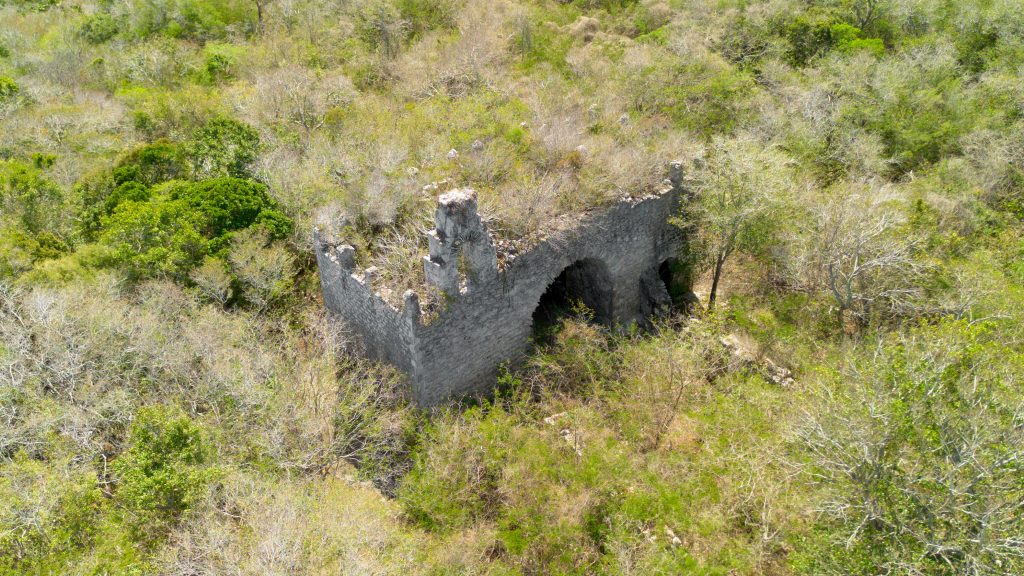
Boca Iglesia: A Threshold of Faith, Memory, and Origin in Isla MujeresEl Cronista y La Peregrina What is the most historically significant cultural site of Isla Mujeres? It’s not what you think. Not Punta Sur, not the visible ruins, not the places that appear on maps or itineraries. It is Boca Iglesia — Isla Mujeres’ best kept secret, and in my opinion, one of the most important historical sites in all of Mexico. Boca Iglesia is not on the island itself, but within the continental zone of the municipality — a reminder that Isla Mujeres is not only the island, but a much larger geography that extends across water, mangrove, and mainland. It exists beyond the routes most people take, held quietly between lagoon and sea, connected but not exposed. Even in geography, it resists being easily placed. To understand Boca Iglesia, you have to begin before it was ever called that. Before the Church, before the Virgin, before the Spanish arrival in 1517. This entire region once formed part of Ekab — a coastal world of Mayan navigators and traders who moved by canoe along what is now known as the Costa Oriental. This was not an isolated edge, but a corridor where movement, exchange, and belief flowed continuously. This was a world shaped by the sea, where navigation, trade, and spirituality were deeply intertwined, and where the presence of Ixchel lived within the rhythm of the coast. In 1517, Spanish explorers arrived along this same coastline, marking one of the earliest points of contact between Europe and what would later become Mexico. Expeditions in 1518 and 1519 followed these same maritime routes. Within this moment, Boca Iglesia begins to take shape — not as a center, but as a threshold, one of the earliest attempts to establish a Catholic presence along this coast. What followed was not permanence, but intention. The Crown ordered the creation of what Fidel Villanueva Madrid refers to as the first Obispado Carolino in all of Mexico— an effort to anchor the Church at the very place where the Spanish first disembarked. At that time, the earliest Catholic images assigned to the Indigenous parish of Ekab were those of San Clemente and Santa María de los Remedios. But the project was short-lived. With no gold to sustain colonial interest, attention shifted inland, where wealth and resources were more immediate. By the mid-17th century, the coastal mission was abandoned, leaving behind fragments — structures, memory, and intention. And yet, even in its failure, it remains one of the earliest recorded attempts to establish Catholicism in what would become New Spain, later Mexico — a quiet but deeply significant chapter in the historical legacy of Isla Mujeres. The story that followed is not linear. In May of 1911, nearly 250 years later, fishermen from Isla Mujeres arrived at Boca Iglesia and encountered a figure of the Virgin Mary within the ruins. These fishermen were Spanish and mestizo descendants who had fled the violence of the Caste War of Yucatán, later settling on the island and already carrying with them a deeply rooted Catholic faith shaped through colonization and conversion in the Yucatán. They did not arrive with much. And in that context, the discovery of the image would not have been ordinary, but profoundly meaningful — something to be received, protected, and understood as a gift from God. When the fishermen brought the Virgin back to Isla Mujeres, she was believed to be the Virgin of the Assumption, and devotion began immediately. Each year, on August 15, she was celebrated as such. It was not until 1934 that a priest clarified that the image corresponded instead to the Immaculate Conception, whose feast day is December 8. But the celebration never fully shifted. The original devotion remained. And so, the same image came to hold two identities — the Assumption and the Immaculate Conception — two names, two dates, and two forms of devotion, all still alive today. Not corrected, but absorbed. And yet, this only deepens the central question: How did she arrive at Boca Iglesia, if it was never recorded that an image of the Immaculate Conception was ever brought from Spain to Boca Iglesia in the time that the Obispado was established there? Historical context offers fragments, but no definitive answer. At the end of the 1550s, Diego de Landa traveled to Guatemala and brought two Marian images back to the Yucatán. These images were distributed across the region, placed in religious centers, replicated, moved, and, over time, lost. There are also local hypotheses. One suggests that hunters from Lázaro Cárdenas may have brought the image to Boca Iglesia and left it there when they went to hunt wild boar. My opinion is that it is possible that she may have been brought there during the time that the parish of Ekab was still active and was later abandoned there. Don Fidel has also spoken of an identical image of this same figure in a church in a pueblo in Yucatán, suggesting that these representations were not unique, but part of a broader circulation. And yet, none of this fully explains how the Virgin came to rest within the ruins of Boca Iglesia. It remains a mystery. If the people of Isla Mujeres could continue to see her as the Assumption even after being told otherwise, how might the Mayans of Ekab have received these images when they were first introduced to them? Not only the Immaculate Conception, but earlier figures like the Virgen de los Remedios, who was presented to the Maya and was depicted standing upon a crescent moon — a symbol deeply tied to cycles, fertility, and the feminine, the same elements that have long defined the spiritual language of this region. The Immaculate Conception would later carry this same lunar symbolism forward. Did they see something foreign, or something familiar?Did they see the Virgin, or did they see Ixchel? Maybe it was coincidence.Maybe it was intentional.Maybe it was a