Blogs

Boca Iglesia: A Threshold of Faith, Memory, and Origin in Isla Mujeres

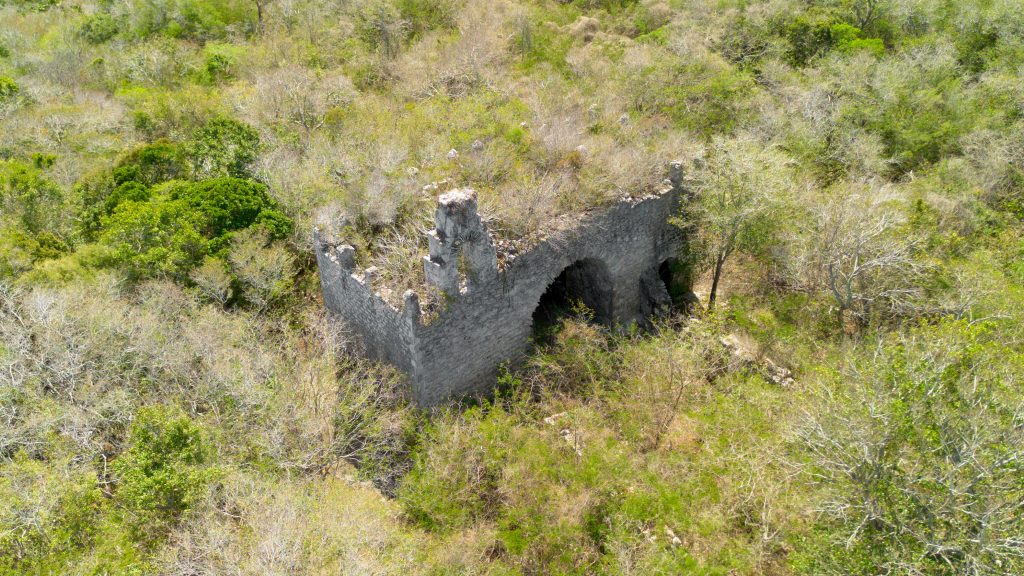
Boca Iglesia: A Threshold of Faith, Memory, and Origin in Isla MujeresEl Cronista y La Peregrina What is the most historically significant cultural site of Isla Mujeres? It’s not what you think. Not Punta Sur, not the visible ruins, not the places that appear on maps or itineraries. It is Boca Iglesia — Isla Mujeres’ best kept secret, and in my opinion, one of the most important historical sites in all of Mexico. Boca Iglesia is not on the island itself, but within the continental zone of the municipality — a reminder that Isla Mujeres is not only the island, but a much larger geography that extends across water, mangrove, and mainland. It exists beyond the routes most people take, held quietly between lagoon and sea, connected but not exposed. Even in geography, it resists being easily placed. To understand Boca Iglesia, you have to begin before it was ever called that. Before the Church, before the Virgin, before the Spanish arrival in 1517. This entire region once formed part of Ekab — a coastal world of Mayan navigators and traders who moved by canoe along what is now known as the Costa Oriental. This was not an isolated edge, but a corridor where movement, exchange, and belief flowed continuously. This was a world shaped by the sea, where navigation, trade, and spirituality were deeply intertwined, and where the presence of Ixchel lived within the rhythm of the coast. In 1517, Spanish explorers arrived along this same coastline, marking one of the earliest points of contact between Europe and what would later become Mexico. Expeditions in 1518 and 1519 followed these same maritime routes. Within this moment, Boca Iglesia begins to take shape — not as a center, but as a threshold, one of the earliest attempts to establish a Catholic presence along this coast. What followed was not permanence, but intention. The Crown ordered the creation of what Fidel Villanueva Madrid refers to as the first Obispado Carolino in all of Mexico— an effort to anchor the Church at the very place where the Spanish first disembarked. At that time, the earliest Catholic images assigned to the Indigenous parish of Ekab were those of San Clemente and Santa María de los Remedios. But the project was short-lived. With no gold to sustain colonial interest, attention shifted inland, where wealth and resources were more immediate. By the mid-17th century, the coastal mission was abandoned, leaving behind fragments — structures, memory, and intention. And yet, even in its failure, it remains one of the earliest recorded attempts to establish Catholicism in what would become New Spain, later Mexico — a quiet but deeply significant chapter in the historical legacy of Isla Mujeres. The story that followed is not linear. In May of 1911, nearly 250 years later, fishermen from Isla Mujeres arrived at Boca Iglesia and encountered a figure of the Virgin Mary within the ruins. These fishermen were Spanish and mestizo descendants who had fled the violence of the Caste War of Yucatán, later settling on the island and already carrying with them a deeply rooted Catholic faith shaped through colonization and conversion in the Yucatán. They did not arrive with much. And in that context, the discovery of the image would not have been ordinary, but profoundly meaningful — something to be received, protected, and understood as a gift from God. When the fishermen brought the Virgin back to Isla Mujeres, she was believed to be the Virgin of the Assumption, and devotion began immediately. Each year, on August 15, she was celebrated as such. It was not until 1934 that a priest clarified that the image corresponded instead to the Immaculate Conception, whose feast day is December 8. But the celebration never fully shifted. The original devotion remained. And so, the same image came to hold two identities — the Assumption and the Immaculate Conception — two names, two dates, and two forms of devotion, all still alive today. Not corrected, but absorbed. And yet, this only deepens the central question: How did she arrive at Boca Iglesia, if it was never recorded that an image of the Immaculate Conception was ever brought from Spain to Boca Iglesia in the time that the Obispado was established there? Historical context offers fragments, but no definitive answer. At the end of the 1550s, Diego de Landa traveled to Guatemala and brought two Marian images back to the Yucatán. These images were distributed across the region, placed in religious centers, replicated, moved, and, over time, lost.  There are also local hypotheses. One suggests that hunters from Lázaro Cárdenas may have brought the image to Boca Iglesia and left it there when they went to hunt wild boar. My opinion is that it is possible that she may have been brought there during the time that the parish of Ekab was still active and was later abandoned there. Don Fidel has also spoken of an identical image of this same figure in a church in a pueblo in Yucatán, suggesting that these representations were not unique, but part of a broader circulation. And yet, none of this fully explains how the Virgin came to rest within the ruins of Boca Iglesia. It remains a mystery. If the people of Isla Mujeres could continue to see her as the Assumption even after being told otherwise, how might the Mayans of Ekab have received these images when they were first introduced to them? Not only the Immaculate Conception, but earlier figures like the Virgen de los Remedios, who was presented to the Maya and was depicted standing upon a crescent moon — a symbol deeply tied to cycles, fertility, and the feminine, the same elements that have long defined the spiritual language of this region. The Immaculate Conception would later carry this same lunar symbolism forward. Did they see something foreign, or something familiar?Did they see the Virgin, or did they see Ixchel? Maybe it was coincidence.Maybe it was intentional.Maybe it was a
The Food of Souls: Isla Mujeres’ Living Tradition

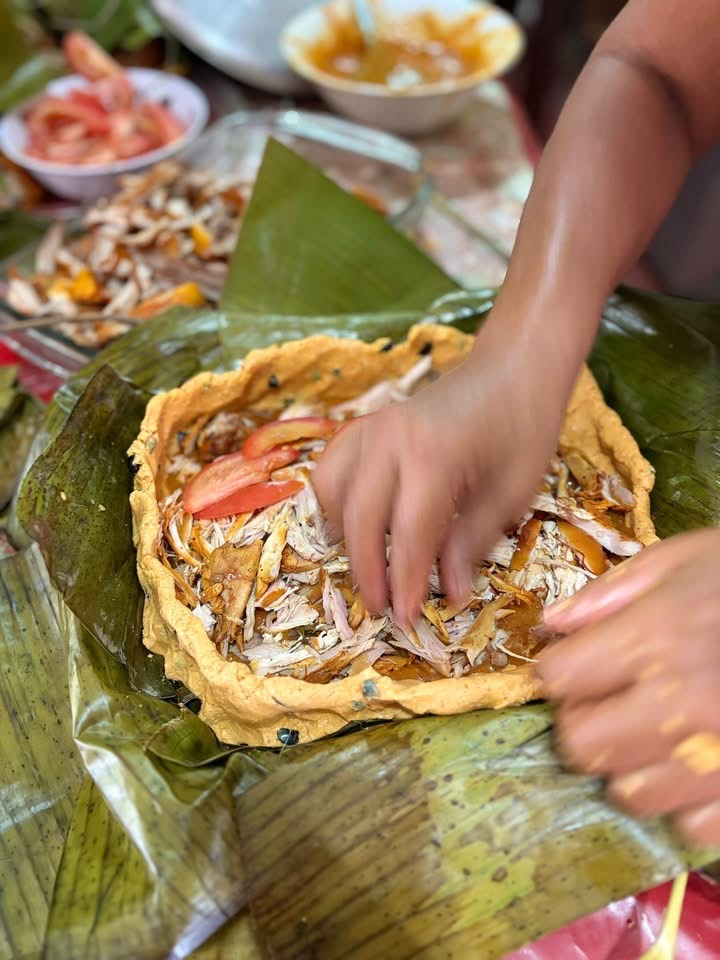
(𝘍𝘪𝘳𝘴𝘵 𝘊𝘩𝘳𝘰𝘯𝘪𝘤𝘭𝘦 𝘰𝘧 : 𝘌𝘭 𝘊𝘳𝘰𝘯𝘪𝘴𝘵𝘢 𝘺 𝘓𝘢 𝘗𝘦𝘳𝘦𝘨𝘳𝘪𝘯𝘢 — 𝘛𝘩𝘦 𝘏𝘪𝘴𝘵𝘰𝘳𝘪𝘢𝘯 𝘢𝘯𝘥 𝘵𝘩𝘦 𝘗𝘪𝘭𝘨𝘳𝘪𝘮) The Day the Souls Come Home In the Yucatán, the end of October doesn’t bring skeletons or parades — it brings something quieter and older. Here, the celebration known as Hanal Pixan, “the food of souls,” carries a rhythm that predates Mexico itself. It is not the Day of the Dead as seen in Mexico City or Oaxaca, but its Mayan ancestor — a ritual that still breathes through island homes, fishing families, and sacred kitchens. Each year, from October 31 to November 7, the living prepare food, prayers, and aromas for the spirits of loved ones who return to visit. The souls of children arrive first on October 31, followed by the souls of adults on November 1, and All Saints’ Day on November 2. For eight days they remain among their families — guided not by photographs or sugar skulls, but by scent, smoke, and memory. In recent years, the municipal government of Isla Mujeres has also organized public Day of the Dead parades and cultural exhibitions, allowing visitors to experience the diverse ways Mexico honors its dead. This effort reflects an intercultural exchange — a celebration that embraces both national and international traditions while preserving the island’s Mayan roots. The Mayan View of Death As historian Don Fidel Villanueva Madrid, Cronista de Isla Mujeres, has explained in his teachings, the Maya never saw night as death but as the certainty of rebirth and a new day. (Paraphrased insight from Don Fidel’s discussion on Mayan cosmology.) Long before Catholicism, the Maya honored the underworld (Xibalbá) not as a place of fear but as a continuation of life — a return to the roots.When the Spanish arrived, their faith and Mayan cosmology intertwined, blending rosaries with incense, saints with ancestral spirits. The result is Hanal Pixan — a fusion where two worlds meet: heaven above and the earth below, connected through the heart of the living. Feeding the Souls Unlike modern Day of the Dead altars, Hanal Pixan’s offerings are profoundly personal. Families build them with what the souls loved most — not just food, but presence: A machete or fishing net for a fisherman.A favorite shirt or hat.A bowl of water and burning pom (copal) to purify the path.Four jícaras of atole symbolizing the directions of the universe “los 4 rumbos.”Black and white candles for mourning and light. At the top or center of every altar stands the fiadora — the Virgin in whom the family places its faith. She is both guardian and witness, the spiritual anchor that blesses the offering. In Isla Mujeres, devotion often centers on La Virgen de la Concepción, patroness of the island, followed by La Caridad del Cobre, La Virgen del Carmen, and La Virgen de Guadalupe, among others. Each family chooses the Virgin who has guided them through storms and seasons — the same divine protector who now welcomes their souls home.The fiadora can also be represented by any Catholic symbol — a cross, a saint, or an image of Christ — whatever form of faith the family holds most dear. While the adult altar is solemn, with a white cloth trimmed in black; the children’s altar bursts with color and playfulness, adorned with toys and colored candles to light their way home. A small side table is set with food and water for the ánima sola — the “lost soul” with no family to pray for it, a gesture of compassion ensuring no spirit goes unfed. Three times a day — at breakfast, lunch, and dinner — families pray, share, and feed the souls with the aromas of candied pumpkin, papaya, sweet potato, and atole. As Don Fidel taught me, the souls are nourished not by the food itself, but by its scent, effort, and the love that created it. (Paraphrased from his comments on the essence of the offering.) The Heart of the Celebration: The Pibipollo On the eighth day comes the farewell — marked by one of Yucatán’s most sacred and labor-intensive dishes: the pibipollo, or buried tamal.It is more than food; it is a work of devotion. Traditionally this dish was served on November 7th, the last day of Hanal Pixan, to make sure that the souls had plenty to sustain them on their journey back. Today el pibipollo is prepared during any day of the ceremonies. Preparation begins days before the souls’ return. Women gather to grind nixtamalized corn by hand, forming the masa that will encase the sacred filling. Pork lard is added for richness, and recado rojo — a vivid Mayan blend of achiote, garlic, oregano, black pepper, and sour orange — gives the masa its fiery color. Some families add espelón beans, a local black-eyed bean hand-separated from its pods — a meticulous, time-consuming task done with patience and rhythm, often lasting an entire afternoon. Following the traditional method described by Don Fidel, a base of masa is pressed into a large bowl form and filled with the col, a savory sauce of broth, masa, and recado rojo (achiote, onion, garlic paste) that is stirred for hours until thick and silky. Layers of meat — chicken, turkey, pork, or beef — are added in between, along with tomatoes, onions, epazote, salt, pepper, and chiles habanero and xkatik. The top is sealed with another thin layer of masa, carefully pressed with the fingers to seal. Every detail matters: the way the masa is kneaded, the way the leaves are softened and cleaned. The dish’s integrity is measured not in taste, but in care. Everything is then wrapped in banana leaves, followed by layers of chit palm, tied tightly with the palm’s natural fibers. Meanwhile, the men prepare the pib — a one-meter-deep pit lined with hard stones. They stack dry wood “leña” inside and light it until the stones turn white-hot. A portion of the embers is removed, and a metal sheet or banana leaves are laid down

Salt, Fire & Faith: The Mayan Roots of Isla Mujeres Cuisine

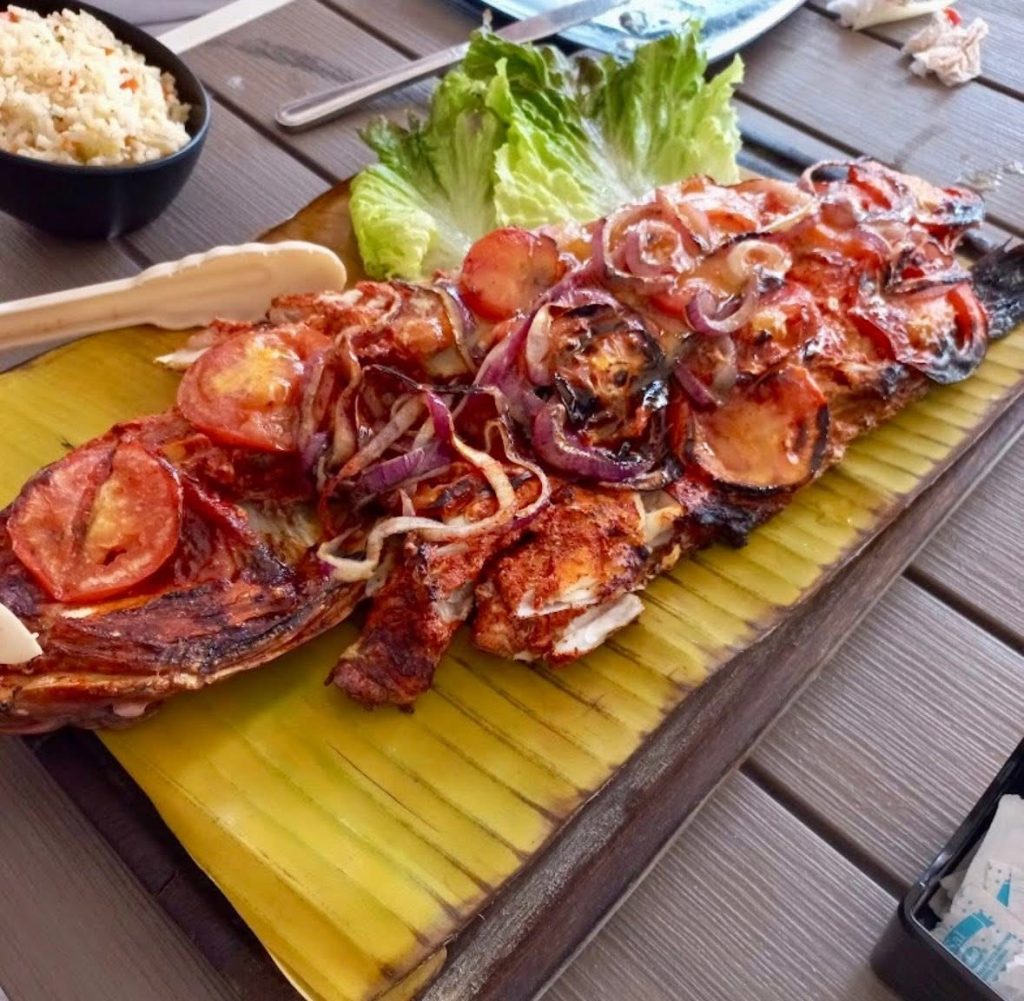
𝘗𝘢𝘳𝘵 𝘰𝘧 𝘵𝘩𝘦 𝘴𝘦𝘳𝘪𝘦𝘴: 𝘌𝘭 𝘊𝘳𝘰𝘯𝘪𝘴𝘵𝘢 𝘺 𝘓𝘢 𝘗𝘦𝘳𝘦𝘨𝘳𝘪𝘯𝘢 — 𝘛𝘩𝘦 𝘏𝘪𝘴𝘵𝘰𝘳𝘪𝘢𝘯 𝘢𝘯𝘥 𝘵𝘩𝘦 𝘗𝘪𝘭𝘨𝘳𝘪𝘮By the time you taste the sea here, it’s already telling you its story. The Island That Fed the Wind The first thing you notice about Isla Mujeres isn’t its color — though the turquoise hums in everydirection — it’s the salt. It clings to your skin, settles in your hair, and sharpens the air you breathe. For centuries, thatsalt wasn’t a souvenir. It was survival. Long before ferries and travelers, the Maya paddled from the coastal pueblo of El Meco,following the rhythm of the tides. They came not to settle, but to harvest — salt from the flats,fish from the reef, and blessings from Ixchel, goddess of the sea, weather, and fertility. IslaMujeres was never a city; it was a sanctuary — a sacred extension of the sea itself. El Meco served as the nearest settlement and trading hub, with a central marketplace largerthan that of Tulum. From here, Isla Mujeres and Contoy were connected by foot and canoe toan expansive network that reached inland to Cobá, Muyil, and Chichén Itzá — and by sea as far south as Panama. Along these watery highways, salt, fish, turtle, and conch traveled like offerings between worlds. Today, boats cross the same channel carrying travelers instead of traders. Yet the island stillfeels like a threshold — suspended between wind, water, and memory. A Sea That Cooked Before Kitchens The Maya didn’t need markets or metal to make flavor. The sea provided everything — mantarays, turtles, manatees, sharks, and fish so abundant they could be caught with woven netsweighted by clay balls, fragments of which were later found during excavations at HaciendaMundaca. They fished from slender canoes, salted the meat, and dried it beneath the sun. Salt wasn’tseasoning — it was survival. From Isla Mujeres and Contoy, the Maya sent salted fish and turtlemeat through El Meco to Chichén Itzá, and by canoe farther south toward Belize andGuatemala. Even now, when you snorkel near El Meco’s reef, you drift through their story — the samecurrents, the same channels, the same shimmering schools of life that once sustained acivilization. El Meco: Where the Trade Winds Begin Across the narrow channel, the ruins of El Meco still guard the sea. Once a thriving port andmarketplace, it was also a ceremonial hub — where faith and commerce met in one tide. Itsmodest pyramid served as a beacon for canoes returning from Isla Mujeres, carrying salt andprayers for abundance.The site’s restoration in 2023 reopened pathways and added interpretive signs that help modern visitors feel the echo of that ancient exchange. As historian Don Fidel Villanueva Madrid notes in his fieldwork, El Meco was not a capital, buta living artery — “a breath between sea and stone.” Stand there in the trade winds, and you can almost hear the voices again: merchants counting bundles, priests offering smoke to the gods, waves carrying news between sanctuaries. Salt: The First Island Currency Before pesos or paper, salt was the island’s true currency. Gathered from Isla Mujeres’sun-bleached flats, it was carried by canoe to El Meco, where it was blessed and bartered. Saltpreserved not just food — it preserved civilization. Some of that salt, traded through the Maya world, reached as far as Panama — and centuries later, shells from Panama were discovered during excavations at Hacienda Mundaca. These shells, prized in pre-Hispanic Panamanian culture, were likely brought as offerings toIxchel, symbols of the deep spiritual and trade connections that once bound Isla Mujeres todistant shores. Fire Without Kitchens Before recipes had names or restaurants lined the shore, there was Tix Nixic — fish rubbedwith salt, painted in achiote, and roasted over leña, charcoal made from dry regional woodsthrough an ancestral process that turned fallen trees into fire. When the Spanish arrived, the dish absorbed new flavors — garlic, citrus, spice — evolving intowhat we now know as Tikin Xic. Yet its soul never changed. Today, that same tradition lives on at Playa Lancheros, La Casa del Tikinxic (formerly Playa Lancheros), where cooks still grill the fish slowly beside the sea, smoke curling into the trade winds. It’s more than a meal — it’s a living connection between past and present, between thefishermen who salted life into existence and those who now preserve it through flavor. Follow Isla Peregrina on Facebook to discover upcoming articles about the best ways to visit El Meco and Isla Contoy from Cancún or Isla Mujeres — and to explore the local stories,families, and traditions that continue to bring these sacred places to life. Follow Fidel Villanueva Madrid’s page for authentic stories, history, and legends of IslaMujeres — directly from the island’s official historian. Just click “See Translation” on his posts to read them in English. Author’s Note This article is part of the bilingual series “El Cronista y La Peregrina — The Historian and thePilgrim,” created in collaboration with Don Fidel Villanueva Madrid, the Cronista Vitalicio(Official Historian) of Isla Mujeres. While the island’s history has been written about before for centuries, this project marks the first time that the voices and memories of Isla Mujeres’ families themselves — fishermen, matriarchs,builders, and dreamers — are being translated and shared in English, directly from local testimonies and archives preserved by Don Fidel. The goal is not only to document history, but to preserve identity, to honor the contributions ofthose who built the island’s character, and to bridge worlds — between past and present,Spanish and English, visitor and islander — fostering the sense of belonging that makes Islaso magical. Through these stories, Isla Peregrina hopes to inspire a deeper understanding of sustainabletourism rooted in cultural respect, reminding all who visit that Isla Mujeres is more than adestination — it is a living legacy of faith, sea, and community.

Walking in the footsteps of the Maya: How to Visit El Meco From Isla Mujeres

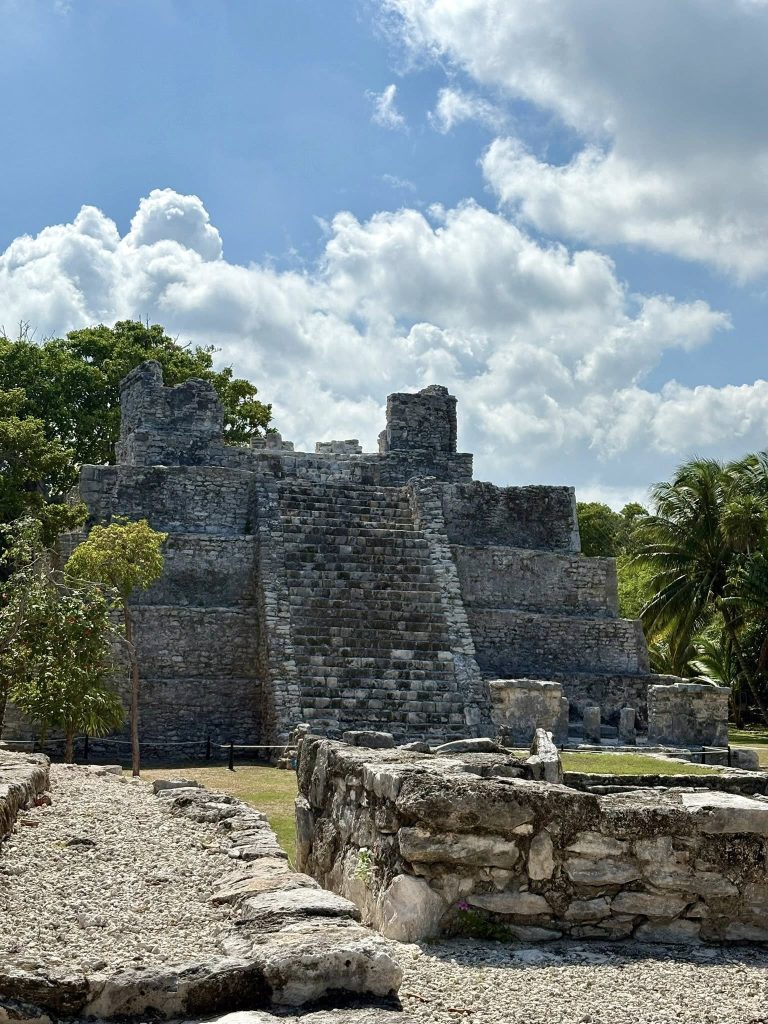
Just across the channel from Isla Mujeres lies El Meco — a site every visitor should know, yet few ever experience. Many people say that Isla Mujeres was uninhabited when the Spanish arrived. This is partially true — but it leaves out an important part of the story. Just across the water, in what is now Puerto Juárez, El Meco was a thriving coastal city, home to one of the largest marketplaces in the region. It served as a vital hub connecting Isla Mujeres and Contoy to a vast Mayan trade network stretching as far as Panama. Isla Mujeres itself was not empty — it was sacred. A place of fishing grounds, salt gathering, and pilgrimage dedicated to Ixchel, the goddess of fertility, medicine, and the moon. In many ways, Isla Mujeres was to El Meco what Contoy is to Isla Mujeres today — a place of seasonal fishing, sanctuary, and connection to the sea. When the Spanish arrived, the Maya did not disappear — they moved inland, carrying their traditions, knowledge, and stories with them. Here, faith met commerce.Salt, fish, and turtle were not only goods — they were sacred offerings that sustained entire civilizations. Standing among its palms and ancient stones, you are at the very crossroads where the island’s story truly began. If you’d like to go deeper into the traditions that tied El Meco to Isla Mujeres, I recommend reading Salt, Fire, and Faith— the companion article that reveals how the island’s first flavors rose from these same tides. Today, you can visit El Meco easily — whether by land or by sea, following the same routes once traveled by the Maya themselves. By Land from Isla Mujeres Step 1 — Ferry to Puerto Juárez ⛴ Ultramar Ferry (every 30 minutes, 7:00 AM – 11:00 PM)💰 Around $580 pesos roundtrip (non-residents)⏱ 20-minute crossing over the same turquoise waters once traveled by Maya traders Step 2 — Taxi or Uber to El Meco 🚕 Just 5 minutes from the ferry terminal💰 $100–$150 pesos each way Step 3 — Explore the Ruins 🕘 Hours: 8:00 AM – 4:00 PM (best light around 3:00 PM)🎟 Entrance Fee: $90 pesos Optional: Private Guide 🗣 English, Spanish, or Italian💰 $500 pesos (1–5 people) + $50 per extra guest✨ A deeper connection to the island’s ancestral story💡 Estimated total (group of 5): ~ $5,000 pesos(bringing your own water, no meals or snorkeling) Bring water, a hat, and comfortable shoes — and take a moment to stand facing Isla Mujeres across the channel. From here, you’ll see exactly what the ancient Maya saw when they paddled toward the island to offer salt and prayers to Ixchel. By Sea — Follow the Mayan Route For those who want something more immersive — not just a visit, but an experience — you can follow the same path the Maya once traveled across the water with Isla Spirit Adventures in Isla Mujeres. El Meco Ruins, Snorkel, and Sunset Experience Book directly:El Meco Ruins: Snorkel & Sunset Tour What’s Included: 🚤 Boat transport to El Meco Archaeological Site🎟️ All entrance fees and guided tour (English, Spanish, or Italian)🐟 Fresh fish lunch — Tikin Xic cooked over open fire by the sea🤿 Snorkeling at El Meco Reef, with vibrant coral and underwater statues🍉 Fresh fruit, soft drinks, beer, and water🌅 Return to Isla Mujeres with a golden Caribbean sunset Pricing: Private Boat (1–5 people): $18,000 pesosPrivate Boat (6–10 people): $21,500 pesosThis is not just a tour.It’s a return journey — where history, food, and sea come together in a way that feels both ancient and alive. Traveler’s Reflection El Meco may be smaller than sites like Chichén Itzá, but its significance is undeniable. With its pyramid rising above the palms and the remains of an active marketplace, it offers something rare — a more intimate connection to the rhythm of daily life in the ancient Caribbean.It’s quiet here. The palms whisper, the iguanas move slowly, and the air feels heavy with stories. You can almost hear the sound of paddles slicing through the water, carrying salt, faith, and the beginnings of Isla Mujeres itself.Whether you come by taxi or by tide, take your time — you’re not just visiting ruins. You’re standing at the crossroads of the Caribbean’s oldest trade winds.

By Sail and Oar: How Spanish-Cuban Fisherman Brought Isla Mujeres to Life

𝘈 𝘴𝘵𝘰𝘳𝘺 𝘰𝘧 𝘵𝘪𝘥𝘦𝘴, 𝘵𝘳𝘢𝘥𝘦, 𝘢𝘯𝘥 𝘵𝘳𝘢𝘯𝘴𝘧𝘰𝘳𝘮𝘢𝘵𝘪𝘰𝘯Before Isla Mujeres was a town, it was a tide — raised by sails from Havana, anchored by hope,and carried forward by the oars of its first fishermen. For centuries after the Spanish conquest, the eastern coast of the Yucatán lay nearly empty. The Maya, fleeing enslavement and forced conversion, retreated deep into the jungles of what is now Quintana Roo. Their temples and coastal fishing camps fell silent, and the sacred island once dedicated to Ixchel — goddess of fertility, medicine, and the sea — became a windswept sanctuary surrounded by salt and horizon. But across the straits, another story was forming. From Havana to Isla Mujeres: The Return to the Coast In the early 1500s, Spanish-Cuban fishermen from Havana and Batabanó — descendants ofSpanish settlers and Cuban Creoles — began crossing the Yucatán Channel in search of richfishing grounds. They traveled in schooners and goletas equipped with viveros — wooden compartmentsdesigned to allow seawater to circulate freely, keeping their catch alive during long journeyshome. Each spring, when the winds softened and the currents turned favorable, their sails appeared on the horizon. They came for grouper and turtle, anchoring along the coast across from Isla Mujeres, movingthrough these waters season after season, following the same currents and reefs that still define the region today — including the untouched island of Contoy. But they brought more than nets and boats.They brought a way of life. When they arrived, they did not remain apart. They came ashore and opened their world to theisland. They brought dates, cheeses, coffee, Romano, wine, and even whole pigs. They prepared largemeals and invited islanders — both aboard their boats and onto the beaches — to eat withthem. They brought gifts.They shared stories.They created a true hermandad — a brotherhood rooted in the sea.And with that, they shared something even more lasting:Knowledge. From Farmers to Fishermen When the first permanent settlement began to form on the island in 1847, at the height of theCaste War, its early inhabitants were not sailors but farmers from across the Yucatán Peninsula. They came seeking refuge from violence and found an island rich in salt, wood, and life from the sea. But to survive here, they had to learn to fish — and their teachers were the Spanish-Cuban fishermen who had been anchoring offshore for generations. Under their guidance, the newcomers learned not only how to fish, but how to live by the sea. They learned to read tides, build and repair boats, fish with hand lines and traps, and navigate by stars, compass, and sextant. They also learned techniques that would become part of the island’s identity — including the use of sombras for lobster, a method of creating shaded shelters on the seafloor to attract and sustainably harvest one of the region’s most important resources. In just a couple of decades, Isla Mujeres transformed from an agrarian refuge into a community of seafarers. The people of the island became Isleños — defined not by the land beneath them, but by thewaters surrounding them. The Sea as Teacher and Bond From 1847 to 1960, life on Isla Mujeres revolved around the sea — not only as a source of food,but as a foundation for faith, friendship, and survival. When one family built a house, everyone helped.When hurricanes struck, neighbors rebuilt together before tending to their own homes. This spirit of unity became the island’s lifeline — a legacy shaped by those early fishermenwhose survival depended on trust, cooperation, and shared knowledge of the sea. As Don Fidel Villanueva Madrid, official historian of Isla Mujeres, reminds us:“In those days, unity was our anchor. That is what lifted us after every storm.” From Sails to Fiberglass Today, the sails are gone.Wooden hulls have been replaced by fiberglass pangas with outboard motors and sport-fishingyachts. The goletas con viveros that once filled the horizon have disappeared, leaving behindonly stories, traditions, and family names.Yet their legacy endures. It lives in the island’s food, its devotion, its rhythms, and in every captain who still reads the sea by instinct rather than by screen. If those early Spanish-Cuban fishermen could see Isla Mujeres today, they might not recognizethe skyline or the pace of life. But they would recognize something deeper — the same salt in the air, the same horizon stretching endlessly forward, and the same quiet devotion to the sea that first brought them here. Because Isla Mujeres was not built on conquest alone, nor commerce alone — but on cooperation. On hands that rowed together, and on the understanding that the only way to survive the sea… was to do it as one. Visual References & Historical Context If you’d like to experience this connection more deeply — through history, photographs, andcuisine — a visit to El Varadero offers a living taste of the island’s Spanish-Cuban heritage. Author’s Note This article is part of the Cronista & Peregrina Oral History Series, a collaboration betweenDon Fidel Villanueva Madrid, Official Historian (Cronista Vitalicio) of Isla Mujeres, and KristenAshley Tywan, writer and founder of Isla Peregrina. Together, they document the living memory of Isla Mujeres — its fishermen, founders, and faith— preserving the stories that shaped the island’s soul.

Scroll to Top